Français
  Nederlands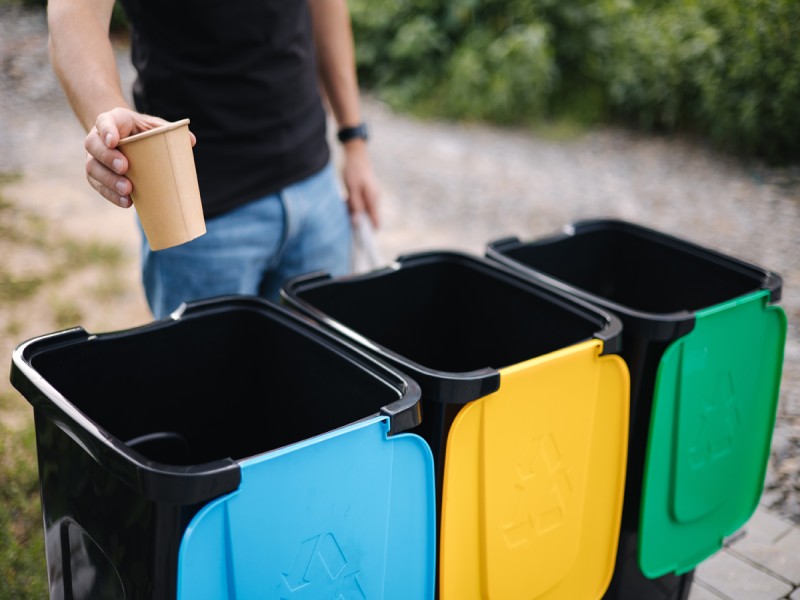
The transition to circular waste management
The Flemish government has set ambitious goals to drastically reduce the amount of residual waste per inhabitant. In the context of European policy regarding the circular economy, there is an increasing focus on stricter sorting rules and advanced source sorting. This approach is driven not only by ecological necessity but also by the rising costs of incinerating residual waste.
By better separating streams such as organic waste, PMD, and paper, the purity of these fractions increases, which is essential for high-quality recycling. Local authorities play a key role here by introducing waste prevention initiatives and optimizing collection systems. The goal is to realize a significant reduction in residual waste volume by 2030, keeping raw materials in the economic cycle and minimizing environmental pressure.Implementing these new sorting rules requires a behavioral change from every citizen.
Correct waste separation is the foundation of efficient management, as any error in the sorting bin jeopardizes the quality of the final product. Government communication and educational campaigns are crucial to raising public awareness about the importance of proper sorting. Furthermore, economic instruments, such as differentiated waste tariffs, encourage households to limit their amount of residual waste. These financial incentives form a direct stimulus for conscious consumption and waste avoidance on a daily basis.
Technological innovation in sorting facilities
In addition to citizen efforts, sorting facilities are investing heavily in advanced technologies to maximize the efficiency of their processes. Modern sorting centers utilize optical sensors, infrared technology, and artificial intelligence to separate various types of plastics and other materials with extreme precision. This technological progress ensures that even complex packaging is processed correctly. The stricter sorting rules applied at the source strengthen these technological efforts, as cleaner input leads to higher yields. It is a synergy between technology and citizen behavior that guarantees the sustainability of the Flemish system. Moreover, there is close cooperation with the industry to make packaging more recyclable from the design stage (eco-design), which offers a structural solution to waste issues.
The transition to a more efficient system also requires continuous evaluation of current legislation. Policymakers closely monitor waste streams and adjust sorting rules based on new data and insights from the sector. This allows for responses to changing consumption patterns and the emergence of new materials. Collaboration between the government, waste intercommunals, and the private sector provides a robust framework that not only meets current European guidelines but also proactively addresses future challenges. This integrated approach is the cornerstone of the Flemish success story in the global transition toward a circular economy.
The role of awareness and local action
Successful waste management depends on the active participation of the citizen. Local authorities take action by providing clear information sessions and facilitating ease of sorting in public spaces. The concept of source sorting is the common thread here. When citizens understand that their efforts contribute directly to the production of new raw materials, the willingness to sort correctly increases significantly. Reducing residual waste is no longer an individual task, but a collective responsibility supported by smart infrastructure. Placing correct sorting bins in parks and on streets helps to combat illegal dumping and improve cleanliness in public spaces.
Furthermore, there is increasing attention toward the impact of the packaging industry itself. Through the principle of extended producer responsibility, manufacturers contribute to the costs of managing their own waste products. This encourages companies to use less packaging material and focus more on reusable alternatives. This integrated approach, involving the chain from producer to consumer, is necessary to achieve the ambitious Flemish goals. It is a long-term process, but results show that recycling plays an increasingly large role in our daily interaction with materials. Ultimately, this process leads not only to less residual waste but also to a cleaner and more livable environment for everyone.
Vision for the future of waste management
The future of waste management in Flanders is closely intertwined with further digitalization and data analysis. By measuring and monitoring waste volumes at the neighborhood level, local governments can take targeted actions and better respond to the needs of specific groups. The implementation of circular principles also ensures that we become less dependent on primary raw materials, offering a strategic advantage in a world with a growing population and limited resources. Innovation in biodegradable materials and the expansion of local recycling hubs offer prospects for a further decrease in the residual waste mountain.
The policy of stricter sorting rules is therefore just one part of a broader societal debate about our consumption culture. The necessity to reduce our ecological footprint is becoming increasingly urgent. By focusing on prevention, reuse, and high-quality recycling, Flanders positions itself as a leader in Europe.
The combination of legislative frameworks, technological innovation, and a conscious citizen forms a powerful cocktail for success. The ultimate goal remains a society where waste is no longer seen as a burden, but as a valuable resource for new products, closing the loop for future generations.